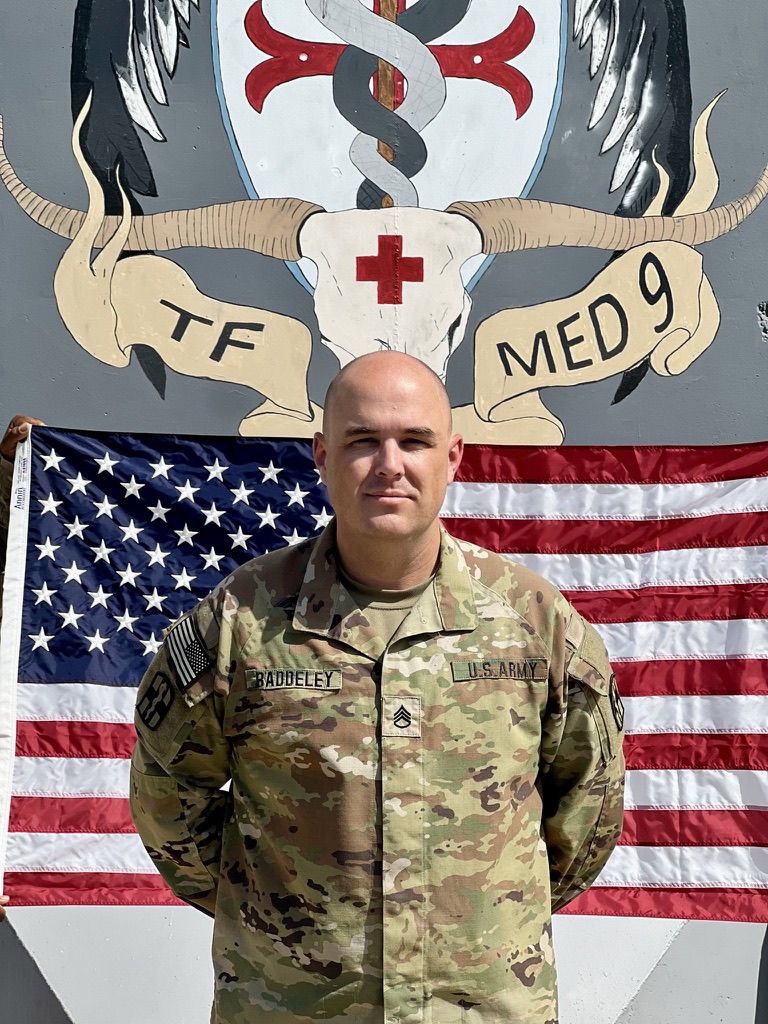
Built by someone who has lived the problem firsthand.
I'm SSG Baddeley, an active duty Army NCO and the sole developer behind TroopToTask. I built it around the admin friction I've seen throughout a career working as a first-line leader, in the orderly room, deployed in the TOC, and as a Troop Clinic NCOIC.
From role to role, the tools changed and technology improved, but the friction stayed familiar: scattered trackers, duplicated updates, unclear ownership, and too much time spent chasing information. Somewhere between the third broken spreadsheet and the fifth version of the same tracker, the idea stopped feeling optional.
The idea for TroopToTask first surfaced while I was deployed as Battle NCO, but high operational tempo and real-world missions took priority.
Later, as NCOIC of a clinic running almost entirely on borrowed manpower, the same problem became impossible to ignore. Most personnel rotated through every few months, while the continuity staff was small and already carrying patient-care responsibilities. That meant constant in-processing and out-processing, clinic scheduling, training calendars, access requirements, training records, and competency packets all had to stay coordinated at the same time.
The clinic made the problem obvious, but it was not unique to the clinic. I had seen the same pattern in line units and staff roles: people move, requirements change, and leaders are left piecing the picture together from disconnected trackers.
TroopToTask came from that pattern. From doing the work, seeing the same friction repeat, and building the tool I kept wishing existed.
Shaped By Real Feedback
TroopToTask is independently built by me, not by a defense contractor or large corporate team. I think that matters because the product is shaped close to the problem. Feedback from leaders actively using TroopToTask across multiple Army locations directly influences what gets built, what gets simplified, and what needs to work better next.
It is still evolving, but the direction is clear: reduce admin drag, keep important work visible, and help leaders spend less time chasing the same information through five different places.
I will never forget walking into a brigade headquarters just in time to hear CSM Moran, then Command Sergeant Major of 1st Medical Brigade, tell his team, "Never lose sight of the fact that every decision we make in these meetings is executed by a Soldier."
That idea has followed me from place to place and shaped the way I approach problems. TroopToTask is built for the leaders who have to make the plan work after the meeting ends.
What TroopToTask Is Not
TroopToTask is not an official Army system, a replacement for required systems of record, or a government-endorsed product.
It is a practical coordination layer for the everyday work that happens around those systems: the handoffs, requirements, schedules, personnel changes, and follow-through that leaders still have to manage.